Understanding the Full Cost of a Mortgage
Summary
- A mortgage costs more than the amount you borrow. Interest, fees and ongoing housing expenses all affect the total.
- Your loan amount, interest rate and repayment term determine how much principal and interest you pay each month and over time.
- Property taxes, homeowners insurance and possibly mortgage insurance can increase your monthly housing payment.
- Closing fees, mortgage points and escrow arrangements affect when and how you pay certain costs.
- A larger down payment, shorter loan term or extra principal payments may reduce total interest, depending on your situation.
A mortgage is a long-term financial commitment, and the monthly loan payment tells only part of the story. Before choosing a loan, it helps to look at the amount you will repay over time, the upfront charges and the ongoing expenses of owning a home. Understanding these pieces can help you make a decision that fits your budget and goals.
What Determines the Cost of a Mortgage?
Three factors have the greatest effect on the principal and interest portion of a mortgage payment:
- Principal: The amount you borrow after accounting for your down payment.
- Interest rate: The rate charged by your lender for borrowing that money.
- Loan term: The length of time you have to repay the loan. A longer term generally reduces the monthly principal and interest payment but increases total interest paid. A shorter term generally does the opposite.
You will also see an annual percentage rate (APR) when reviewing a mortgage offer. APR reflects the interest rate along with certain points, fees and other borrowing charges. That makes it useful for comparing loan costs, even though it is not the same as the interest rate used to calculate your monthly principal and interest payment. When you compare mortgage options, look at the interest rate, APR, term and upfront costs together.
A Mortgage Cost Example
Suppose you buy a $415,000 home with a 5% down payment, leaving $394,250 to finance. On a hypothetical 30-year fixed-rate loan at 5% interest, you would pay approximately $2,116 per month in principal and interest, or $761,911 over the life of the loan. At 7% interest, the same loan amount and term would cost about $2,623 per month, or $944,264 in total principal and interest.
The higher rate adds roughly $182,353 over the life of the loan. These examples are illustrations, not current rate offers. They exclude closing costs, property taxes, insurance and other expenses.
What Goes Into a Monthly Mortgage Payment?
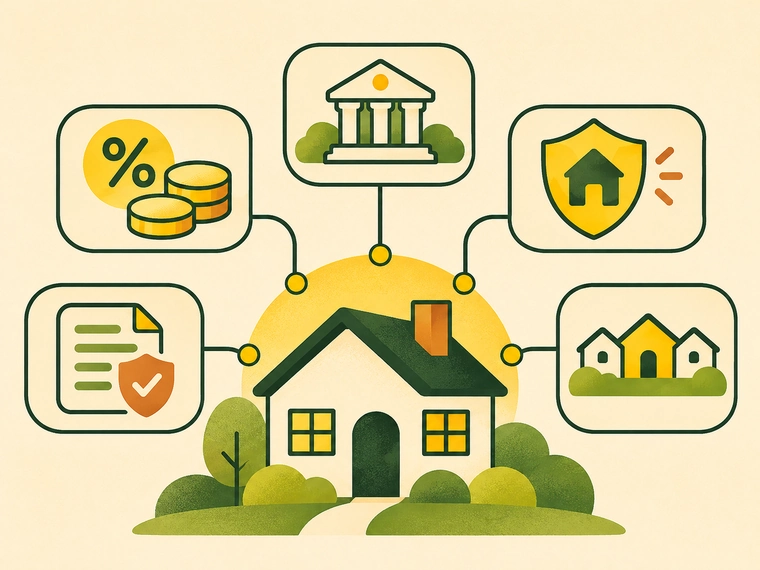
Your monthly housing payment may include more than principal and interest. Depending on your loan and how bills are collected, you may also need to account for:
- Property taxes: Local taxes based on the property's assessed value and applicable tax rates. The amount depends on where the home is located.
- Homeowners insurance: Coverage generally required by a mortgage lender, which may be paid through the monthly payment or separately.
- Private mortgage insurance (PMI): An additional expense that may apply when your down payment is less than 20%, depending on the loan. PMI protects the lender if the borrower defaults.
Homeowners association (HOA) dues may also apply to your property. These dues are generally paid separately from the mortgage, so they belong in your housing budget even when they do not appear on the loan statement. For more help organizing housing costs alongside other expenses, see how the 50/30/20 budget rule works.
Upfront Fees and Mortgage Points
Some mortgage expenses are due when you obtain the loan rather than being spread across monthly payments. They can include application charges, origination fees and other closing costs. Mortgage points are another item to review because not all points serve the same purpose.
- Discount points: Money paid upfront in exchange for a lower mortgage interest rate. One point commonly equals 1% of the loan amount, while the reduction in rate depends on the offer.
- Origination points: Charges from the lender for making the loan. A half point on a $250,000 mortgage equals $1,250.
Paying discount points can make sense when the interest saved over time outweighs the upfront expense, but the value depends on the loan terms and how long you keep the mortgage. If you refinance your mortgage before those savings offset the upfront charge, the points may not pay off. Before closing, compare these charges with the rate and total repayment cost.
How Amortization and Escrow Work
How Amortization Affects Each Payment
Amortization is the process of repaying a loan through scheduled installments. With a standard fixed-rate, fully amortizing mortgage, the principal and interest payment stays the same, but the way it is divided changes. Early payments generally devote a larger share to interest. As the outstanding balance declines, more of each payment goes toward principal.
What an Escrow Account Does
An escrow account allows the lender to collect money for certain property-related bills, often property taxes and homeowners insurance, as part of the monthly mortgage payment. The lender holds those funds and pays the bills when they come due. Many mortgages require escrow, although arrangements can vary. If you do not use an escrow account, you will need to plan for those bills and pay them directly.
Ways to Manage the Total Cost of a Mortgage
Reducing your long-term mortgage cost starts with understanding the tradeoffs between cash needed now and money paid over time. Consider these approaches:
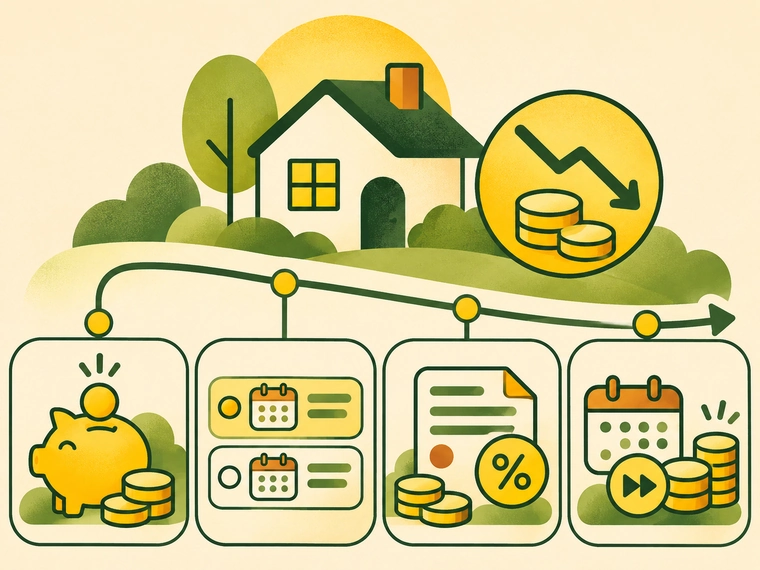
- Make a larger down payment when practical. Borrowing less can lower your monthly principal and interest payment and the total interest you pay. It may also reduce the need for mortgage insurance.
- Compare shorter repayment terms. A shorter term generally increases your monthly principal and interest payment but can substantially reduce lifetime interest costs.
- Make extra payments toward principal when your budget allows. Paying down the loan balance faster can reduce future interest and shorten the repayment period. Confirm how extra payments are applied.
- Review points, fees and early payoff terms. Consider whether paying upfront for a lower rate is worthwhile, and check for any prepayment penalties before committing to additional payments.
The lowest monthly payment is not necessarily the lowest overall cost. Look at the payment you can comfortably manage, the cash required at closing and the amount you expect to repay over time. If you would like help comparing terms, a First Financial mortgage expert can walk through the available options with you.
Frequently Asked Questions
Is APR the Same as My Mortgage Interest Rate?
No. The interest rate is used to determine interest charged on the loan balance. APR also accounts for certain points, fees and other borrowing costs, making it a broader measure for comparing offers.
Does Every Mortgage Payment Include Taxes and Insurance?
Not necessarily. These expenses are often collected through escrow, but some homeowners pay them separately. Review your loan terms and budget for the full amount either way.
Can Extra Mortgage Payments Lower the Total Cost?
Additional payments applied to principal may shorten the repayment period and reduce interest. First check how your lender processes extra payments and whether any prepayment penalty applies.