Buying vs. Leasing a Car: How to Choose
Summary
- Buying a used car can lower the purchase price, but you may need to budget for maintenance and repairs sooner.
- Buying new may provide newer features, warranty coverage and financing incentives, but depreciation can reduce the car's value quickly.
- Leasing may require less money upfront and let you drive a newer vehicle, but you do not build ownership equity and may face mileage or damage charges.
- Compare the full cost, your driving habits and your budget before deciding which option fits your needs.
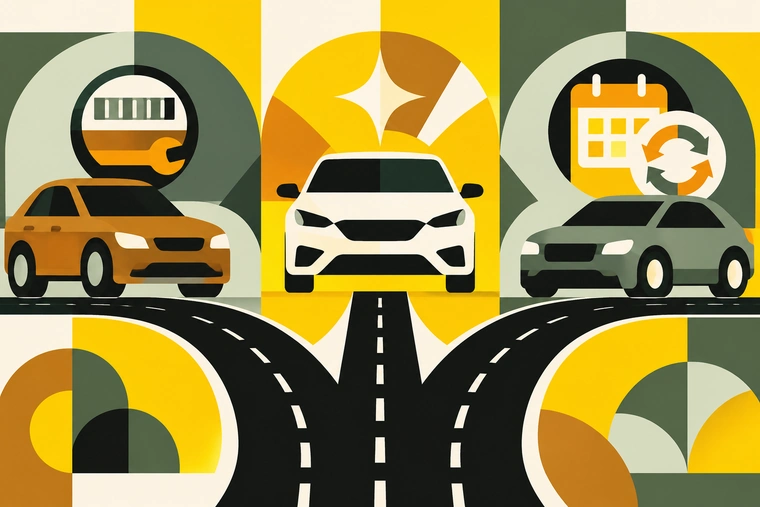
Choosing a vehicle involves more than finding the right make and model. You also need to decide whether to buy a used car, buy a new car or lease. Each choice affects how much you pay now, what you may spend later and whether you own the vehicle. Understanding those trade-offs can help you choose with greater confidence.
Buying a Used Car
A used car often costs less than a comparable new model. Depending on the vehicles you're comparing, the difference can be substantial. Some used-car purchases may cost 25% to 30% less than buying new, although actual savings vary. That lower purchase price may leave room in your budget for other priorities or allow you to consider a vehicle with additional features.
Buying used also means the vehicle has already experienced some of the depreciation that affects new cars most sharply. Insurance and registration costs may be lower as well, depending on the vehicle and your circumstances.
The trade-off is the potential for earlier maintenance and repairs. Before buying, have a trusted mechanic inspect the vehicle and consider what it may cost to keep it in good condition. A lower price is most helpful when the vehicle remains dependable and affordable to operate.
Buying a New Car
A new car may appeal if you want current safety, performance and comfort features. You may also have access to dealer incentives, cash rebates or financing promotions. Manufacturer warranties can help cover certain repairs, but read the details: coverage often depends on time, mileage and other terms.
The biggest financial consideration is depreciation, which is the loss of value over time. New cars can lose value quickly, especially early in ownership. For illustration, a 20% decrease in the value of a $25,000 vehicle would equal $5,000. That example is not a prediction for every vehicle, but it shows why resale value matters if you expect to sell or trade in the car.
When evaluating an offer, look beyond the advertised incentive. Consider the purchase price, financing terms, likely ownership costs and how long you intend to keep the vehicle.
Leasing a New Car
Leasing gives you the use of a vehicle for an agreed period instead of purchasing it outright. Payments are based in part on how much value the car is expected to lose during the lease. For example, if a $25,000 vehicle is projected to be worth $15,000 after three years, the $10,000 difference represents its expected depreciation. That difference is not the full cost of a lease, so review all the contract terms before making a comparison.
A lease may require less money upfront than a purchase and can offer a way to drive a newer car every few years. However, your lease payments do not build ownership equity. You may also owe additional charges if you exceed mileage limits or return the car with damage beyond the agreement's terms.
Leasing may be less appealing if you drive long distances or want to keep the same vehicle for many years. Compare the longer-term cost of repeatedly leasing with the cost of buying and continuing to drive a car after the loan is paid off.
How to Compare Your Options
The right choice depends on what you need from a vehicle and what you can comfortably afford. Before you commit, consider these questions:
- Upfront cost: How much can you put toward a down payment or lease without using money you need for other goals? A 10% to 20% down payment is one purchase-planning benchmark, while some leases may require less upfront.
- Ongoing cost: What will you spend on payments, insurance, registration, fuel, maintenance and possible repairs?
- Driving habits: How far do you typically drive, and could a lease's mileage restrictions become costly?
- Ownership plans: Do you want to keep your car for several years, or would you rather change vehicles more frequently?
- Unexpected expenses: Will you have room in your budget for repairs or other costs that come with driving?
Before shopping, review your monthly budget to decide what vehicle costs fit alongside your other priorities. You can also track spending and set budget limits as you prepare for a payment and ongoing expenses.
If you expect to finance a purchase, learn about auto loans before focusing on a particular car. If you're still building a down payment or a reserve for future maintenance, explore personal savings options that fit your goals.
Frequently Asked Questions
Is Buying a Used Car Always Less Expensive?
Not necessarily. A used car generally has a lower purchase price, but maintenance, repairs, insurance and other costs can change what you spend over time. Compare the total cost of the specific vehicles you're considering.
Will I Own the Car at the End of a Lease?
Not automatically. Lease payments are for the use of the car under the agreement, and they do not build ownership equity. Review the contract so you understand what happens when the lease ends.
What Costs Should I Plan for Besides the Car Payment?
Include insurance, registration, fuel, maintenance and repairs. If you lease, also account for possible excess-mileage or vehicle-damage charges. A budget that covers these expenses can make your decision more manageable.
Choose What Fits Your Budget
Buying used, buying new and leasing each offer advantages and trade-offs. Consider your driving needs, expected ownership period and total costs rather than judging the options by the monthly payment alone. The most useful choice is one that meets your transportation needs without crowding out your other financial priorities.