

Seasonal Cash Flow Planning for Your Business
Busy seasons bring opportunity, but they can also bring expenses before revenue arrives. Slower months have their own demands, from payroll to equipment upkeep. Seasonal cash flow planning helps you see what’s coming and make decisions with more confidence.
Use this seven-step seasonal business planning checklist to understand when cash comes in, prepare for upcoming costs and keep your business moving through every season.
Summary
- Seasonal sales don’t always align with business expenses.
- Major purchases and staffing can strain cash reserves.
- Late customer payments can leave gaps in cash flow.
- Payment schedules affect how much cash is available.
- Working capital helps cover expenses during slower months.
- Regular reviews help keep your plan realistic.
1. Map Out Your Business Cash Flow
Start by comparing when money comes into your business with when bills need to be paid. Those dates may be months apart. For example, corn farmers often pay for seed, fertilizer and equipment before planting, long before harvest revenue arrives. Across hundreds or thousands of acres, those early costs add up. Retailers and other seasonal businesses face similar timing gaps when buying inventory or hiring ahead of peak demand.
Look at your busiest and slowest months so you can spot periods when expenses may outpace incoming cash.
Checklist
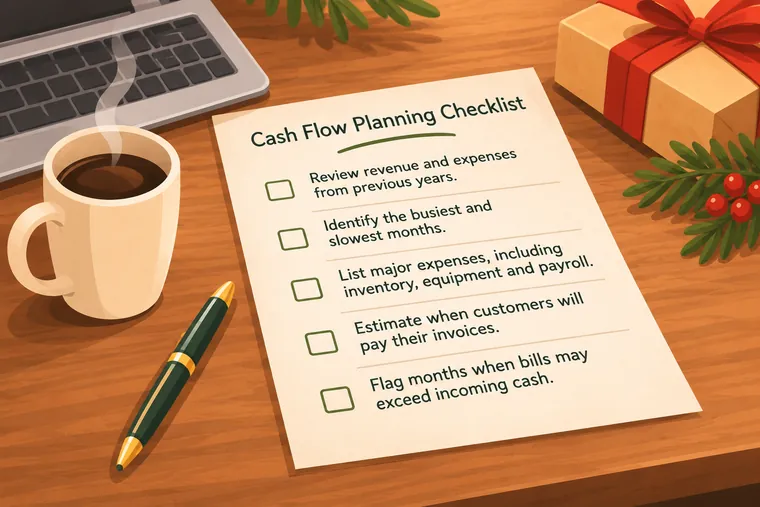
- Review revenue and expenses from previous years.
- Identify the busiest and slowest months.
- List major expenses, including inventory, equipment and payroll.
- Estimate when customers will pay their invoices.
- Flag months when bills may exceed incoming cash.
Turn what you find into a monthly cash flow forecast. Check it regularly and adjust it as your business changes.
2. Plan Major Purchases
Plan purchases around when you’ll need them and when you expect cash to be available. Some orders are essential before the busy season. Others may be able to wait. Compare those needs with your cash flow forecast before committing funds.
Checklist
- List major purchases expected before the busy season.
- Compare supplier prices, payment terms and delivery dates.
- Include deposits and ongoing costs.
- Reserve money for unexpected repairs and changes.
- Time large orders around expected cash inflows.
This helps you prepare for demand while keeping cash available for other priorities.
3. Plan for Seasonal Staffing Needs
More customers may mean more hands on deck. The goal is to have enough people to serve customers well without taking on payroll costs your business cannot sustain when demand slows. Use past seasons to estimate how much help you’ll need and when to hire.
Checklist
- Review staffing needs from previous busy seasons.
- Account for training, payroll and potential overtime.
- Set a hiring timeline based on expected demand.
- Plan how to manage essential tasks when business slows down.
- A clear staffing plan helps you prepare for the rush and adjust as business slows.
4. Get Paid on Time
A completed sale does not always mean cash is available. If customers pay invoices weeks later, you may need to cover expenses in the meantime. To understand the timing, calculate your accounts receivable turnover ratio: divide net credit sales by average accounts receivable. Then divide 365 by that ratio to estimate the average number of days it takes to collect payment. If that number rises during your busy season, review how payment delays affect your cash flow.
Checklist
- Review outstanding invoices and recurring delays to identify overdue balances.
- Set a regular schedule for payment reminders and follow-ups.
- Track collection performance over time.
- Use merchant services to accept card and online payments.
- Want a clearer picture of incoming payments? Explore accounts receivable services from First Financial Bank and talk with a banker about your collection process.
5. Schedule Payments Around Cash Flow
A reliable cash flow plan accounts for both incoming payments and bills that are due. Compare payment dates with your forecast so you can protect cash for essential expenses. If a large bill comes due before revenue arrives, ask suppliers what payment terms may be available.
Electronic payment tools may help you organize routine payments and spend less time processing transactions.
Checklist
- List recurring bills and their due dates.
- Flag large payments due before revenue arrives.
- Review supplier terms and ask about available payment options.
- Set aside enough cash for payroll, taxes and essential expenses.
- Schedule payments in advance.
To review how your business manages outgoing payments, explore accounts payable services from First Financial.
6. Review Working Capital
Even a normal seasonal slowdown can make it harder to cover day-to-day expenses. Equipment repairs or overdue invoices may add pressure at the same time.
Working capital for small business means the money available to cover everyday operating needs. Review your cash reserves and expected expenses to understand what your business may need when sales slow or costs rise.
Checklist
- Estimate when cash shortfalls may occur and the amount needed.
- Determine the amount of additional funding needed and the expected duration.
- Discuss financing options with a banker before the need arises.
- Include borrowing costs and repayments in the cash flow forecast.
- Review available cash reserves.
If your forecast shows a temporary gap, ask your banker whether a business line of credit for seasonal businesses could fit your needs. A line of credit may provide access to funds for eligible business expenses, subject to approval and agreement terms. Before deciding, review the interest, fees, credit limit and repayment requirements.
7. Adjust Your Plan as the Season Unfolds
Your forecast is a starting point, not a fixed schedule. Demand may arrive early, supplier costs may change or an inventory delay may affect sales. Customer payments may also take longer than expected.
Compare your forecast with actual results throughout the season. Small updates can help you decide where to adjust spending and what to plan for next.
Checklist
- Compare forecasts with actual revenue and expenses.
- Update estimates when costs or customer demand change.
- Record what worked and what to change next season.
Plan Ahead for Your Next Season
Every business has its own seasonal rhythm. A busy summer may require spring preparation. A quieter winter may give you time to plan purchases for the year ahead. Review what past seasons have taught you and use those lessons to make a plan that fits where your business is headed.
You don’t have to sort through every cash flow decision alone. If you want to review seasonal working capital or payment collection options, a First Financial banker can help you understand your choices and plan your next step.