
How to Teach Kids Money Basics With a Three-Jar Allowance System
Summary
- A three-jar system helps kids separate money for saving, spending and giving.
- The amount of allowance can depend on what you expect your child to pay for and whether you connect allowance to chores or other responsibilities.
- A specific savings goal can make it easier for kids to understand why they are setting money aside.
- When one jar runs low, encourage your child to adjust the plan or wait rather than taking money from another jar.
- An optional fourth jar can introduce investing and the possibility that investments may gain or lose value.
Money lessons can start long before a child has a bank account. A simple three-jar allowance system gives kids a hands-on way to practice budgeting by deciding what to save, what to spend and what to give.
Start With Money Your Child Can Manage
Kids need money to practice managing it. That money might come from an allowance, chores, small jobs for family or neighbors, gifts or a simple business. Older kids who want to earn more may also be interested in learning how to start a business as a young entrepreneur.
If you use an allowance, decide what you expect it to cover. A small allowance may be enough for treats or a savings goal. An older child who is expected to pay for clothing, school supplies or other needs may require more.
You can also decide whether allowance is tied to chores or other expectations. Some families connect the two, while others treat allowance mainly as a money-management lesson. Choose an approach that fits your household and gives your child enough responsibility to make real choices.
How the Three-Jar System Works
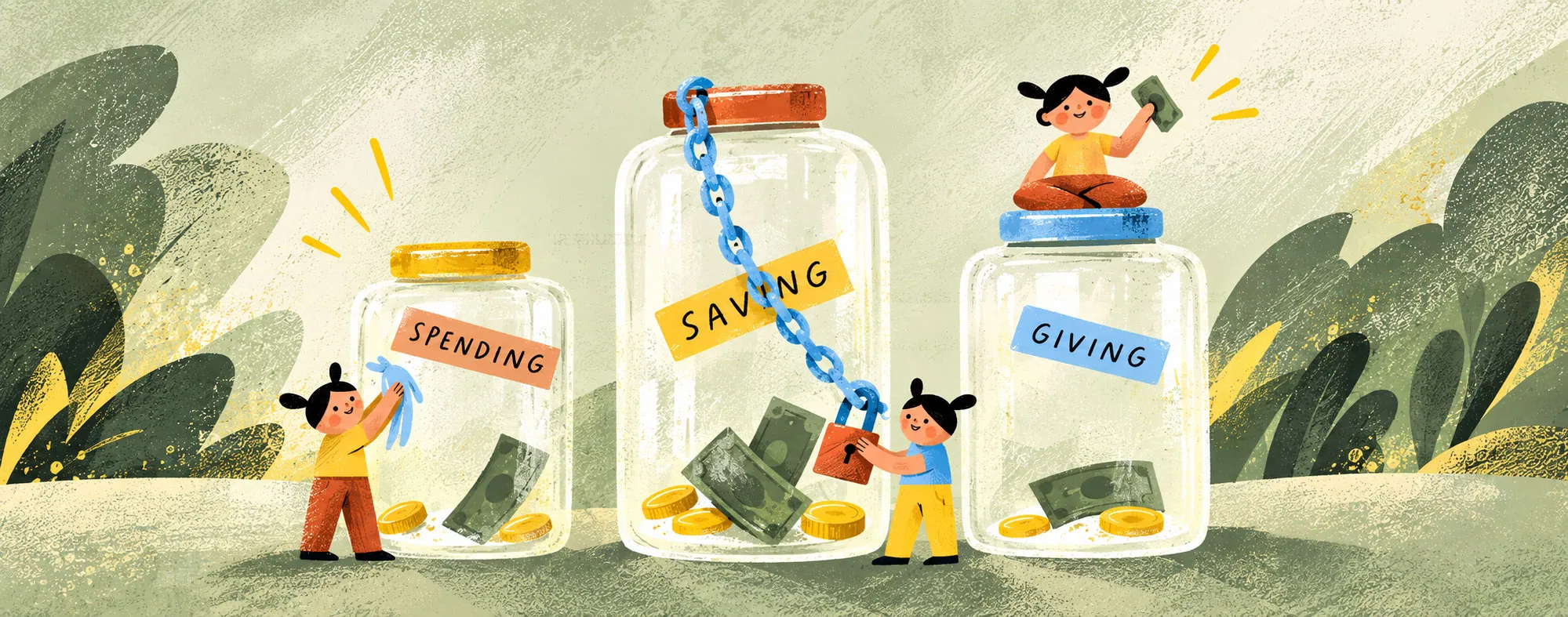
Set out three clear jars and label them for saving, spending and giving. Each time your child receives money, help them decide how much goes into each jar. The goal is not to find one perfect split. It is to help your child make a plan and practice following it.
When a jar runs short, use that moment as part of the lesson. If your child wants something that costs more than what is available in the spending jar, they can wait, earn more money, change their priorities or adjust the budget. Try to avoid moving money from the saving or giving jars simply to cover an unplanned purchase.
The Saving Jar
The saving jar works best when the money has a purpose. Help your child choose a specific savings goal, such as a toy, game or other purchase they want to work toward. A visible goal can make the tradeoff between spending now and saving for later easier to understand.
You can agree on a simple rule for saving, such as putting a set percentage into the jar each time money comes in. The exact amount can vary based on your child's goals and the way your family wants to divide the money.
The Spending Jar
The spending jar is for things your child wants to buy now. That could include small treats, toys or other everyday purchases. For an older child, it may also include clothing, school supplies or other expenses if your family has decided they should pay for some of those items.
Whatever you place in this category, make sure your child has a realistic way to earn or receive enough money to cover the expenses you expect them to handle.
The Giving Jar
The giving jar helps children practice setting money aside for other people or causes that matter to them. Your child might choose to donate to a charity, contribute to a community effort or buy a gift for a friend, teacher or family member.
When possible, help your child see what their giving accomplished. Connecting the money to a real person, cause or outcome can make the lesson more meaningful.
Consider an Optional Investing Jar
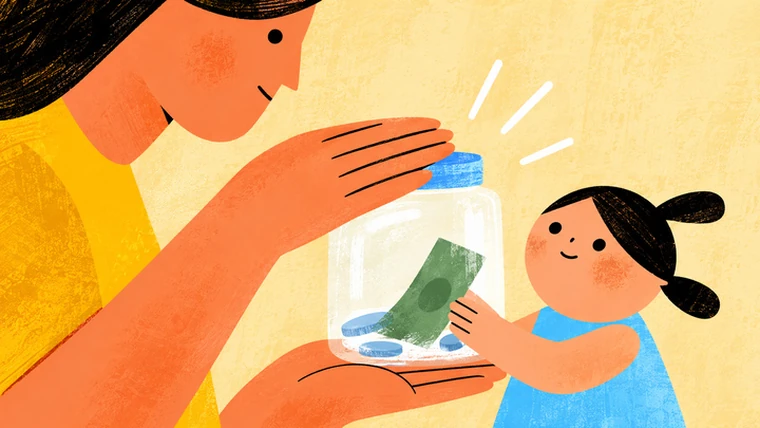
Once your child understands the three basic jars, you can add a fourth jar for investing. This money can be set aside while you explain that investing is intended for longer-term growth and can also involve the risk of losing money.
The purpose at this stage is to introduce the idea gradually, not to make the system more complicated than your child can manage.
Help Kids Stick With the Plan
A budget becomes useful when a child practices making choices within it. You can keep the system simple by focusing on a few habits:
- Let your child help decide how the money will be divided.
- Choose clear goals for money in the saving jar.
- Encourage your child to pause and reconsider when the spending jar is empty.
- Review the plan together and adjust it as your child's responsibilities or goals change.
The jars provide structure, but the conversations around them are where much of the learning happens. Asking what your child wants, what they are willing to wait for and why they chose to give can turn everyday money decisions into useful practice.
Move From Jars to a Bank Account
As your child becomes comfortable with the system, a bank account can be a natural next step. Moving some of the money into a savings account designed for young savers can create an opportunity to talk about deposits, interest and how accounts work.
Families can continue using the same budgeting ideas even when the money is no longer kept in physical jars. You can create separate goals, help your child track savings goals and keep talking about the difference between money for today and money for later. You can also use the transition to an account as another chance to help your child manage money with your guidance.
Frequently Asked Questions
How Much Allowance Should a Child Receive?
Start with what you expect the allowance to cover. If it is mainly for small treats or a savings goal, the amount may be modest. If an older child is expected to pay for clothing, school supplies or other necessities, the amount may need to be higher.
Should Allowance Be Tied to Chores?
It can be, but families take different approaches. If you connect allowance to chores, be clear about which tasks earn money. If you do not, you can still use allowance as a way to teach planning, saving and spending.
How Should Kids Divide Money Among the Jars?
There is no single required split. Some families use a fixed percentage for saving, while others decide together each time money comes in. The important part is creating a plan your child can understand and practice following.